

 English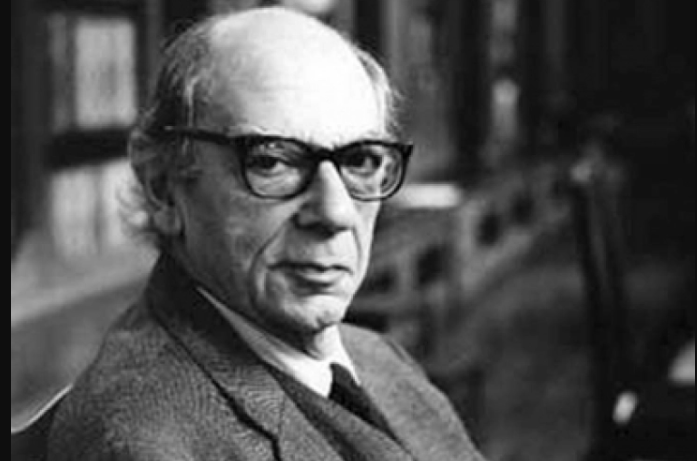
While Bulgaria today attempts to claim Tsar Samuil as its exclusive heritage, this was not the case “a few decades ago.” Indeed, traditions associated with Samuil are not found in Bulgarian Orthodox literature. And when anything regarding him is recounted, it is usually accompanied by a “certain reticence.” This is due to the fact that the Bulgarian Church held no significant position within Samuil’s Macedonian empire at the time.
This is the conclusion reached by Dimitri Obolensky of the University of Cambridge (Sir Dimitri Obolensky (1918–2001) was a prominent Russian-British historian and Byzantinist who studied and briefly taught at the University of Cambridge before embarking on a long career as a professor at Oxford). In his 1948 work The Bogomils, on page 151, Obolensky writes regarding Samuil:
Despite this incontrovertible evidence, Samuil’s name remains persistently linked to suspicions of heterodoxy. It is significant that, while the great Orthodox tsars Boris, Simeon, and Peter are frequently extolled in Bulgarian literary monuments and have become the objects of a national cult, Samuil’s name is almost entirely absent from Bulgarian Orthodox literature and is invariably shrouded in a veil of reticence. The explanation for this fact likely lies in the status of the Bulgarian Church within Samuil’s Macedonian empire. By refusing to recognize the abolition of the old Bulgarian Patriarchate—imposed by John Tzimiskes—and by appointing his own patriarch, Samuil severed all ties with the Ecumenical Patriarchate. In the eyes of the Byzantine Church and state, he remained a rebel throughout.
Within his own empire, Samuil was compelled to pursue a policy that was essentially nationalist in both ecclesiastical and political terms; for this policy to succeed, it required the cooperation of all factions and groups in Bulgaria toward a single goal: the destruction of Byzantine rule and its dominance over the Balkan Slavs. Such cooperation presupposed a state of internal equilibrium; thus, it is understandable that Samuil could not afford to alienate the Bogomils, who at the time undoubtedly constituted a significant portion of his subjects. This probable tolerance of heretics for political reasons may well have given rise to the popular legend linking Tsar Samuil to Bogomilism.