

 English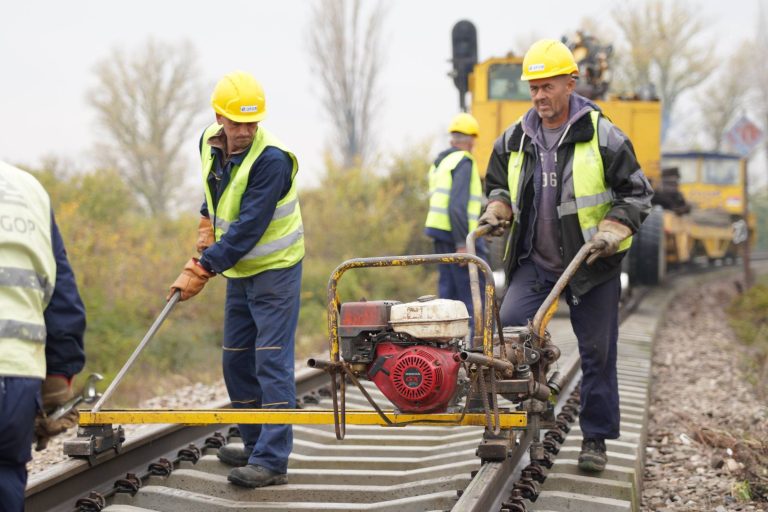
The city train line of the Skopje City Train is operating regularly and carrying over 300 passengers daily, exceeding expectations. “Our vision is to create an integrated public transport system—combining the city train, electric buses, BRT, and intercity rail—to reduce air pollution,” says Aleksandar Nikoloski, Deputy Prime Minister and Minister of Transport, in an interview with Radio Lider.
“We have a city train service that no one believed in—neither the opposition nor the majority of the public. To be honest, the figures are better than I expected. We are already seeing around 300 passengers a day. That means 300 fewer vehicles in the city center, 300 fewer sources of traffic-related stress, and 300 people arriving on time. Design work for the other two lines is currently wrapping up. Tenders will be issued in a few weeks; once a contractor is selected, construction will begin. As promised, by early 2028, we will have two additional routes in place, covering the entire city of Skopje,” Nikoloski noted.
As announced, the plan is to integrate the entire public transport system; the goal is not only to ensure more efficient transport but also to help reduce air pollution. “The first phase is part of a broader vision—shared by me and the Government—for the City of Skopje, aimed at easing traffic congestion and reducing pollution. Specifically, if we succeed in creating a functional and integrated system comprising three urban train lines and intercity rail connections to Veles, Kumanovo, Tetovo, and Gostivar—and complement this with electric buses and a BRT system—we will have solved the pollution problem. That would leave the issue of heating, which is a major factor in Skopje’s pollution, to be addressed,” noted Nikoloski.