


 English
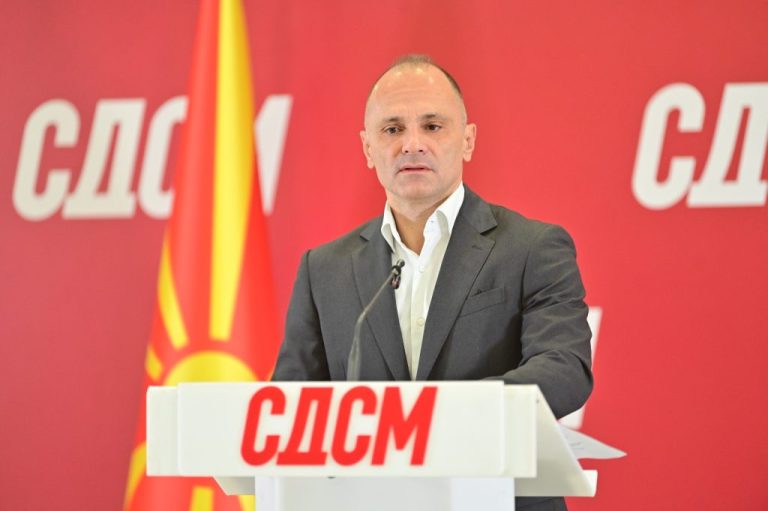
The former director of TIRZ and SDSM leadership contender Jovan Despotovski directed sharp criticism at the current leadership of the party, assessing that the party needs a completely new concept of operation, and not just internal consolidation. In TV interview, Despotovski accused Venko Filipce who, he says, despite their long-standing friendship, is not a suitable person for president of SDSM.
“I have not said anything bad about Venko, because he has been a personal friend of mine for thirty years. I think he is a super doctor. However, if you ask me whether he is a suitable person for that position, my answer is absolutely no. Absolutely no,” Despotovski stated.
According to him, the problems in the largest opposition party are much deeper than the question of personnel strengthening or uniting the membership. He believes that the term “consolidation” does not reflect the real situation in SDSM, because, as he explained, consolidation implies the existence of a healthy foundation on which the party can further develop.
“I think that things need to be completely set up from the beginning, defining a new foundation, a new base and a new approach in politics,” Despotovski emphasized.
He also criticized the way the opposition reacts to the current economic and social problems, pointing out that instead of constantly seeking culprits, it should offer concrete solutions for the citizens.
As an example he cited the case of Alta Bank, assessing that in moments when citizens are facing uncertainty about their money, political parties should be focused on solving the problem, and not on mutual accusations.
“How does the identification of who is to blame help those people who stood in front of the counter and waited to withdraw their pension? In no way,” Despotovski pointed out.
According to him, a responsible opposition should come out with concrete proposals for overcoming the crises, while the questions of political responsibility should be examined after solutions for the citizens have been secured. Despotovski particularly criticized the daily publication of a large number of party announcements, assessing that such a way of communication does not create a real political alternative.
“If you consider that functioning is delivering seven or eight announcements during the day, in my opinion that is totally irrelevant. Not only is it irrelevant, but it stifles the public space,” he stated.