
 English
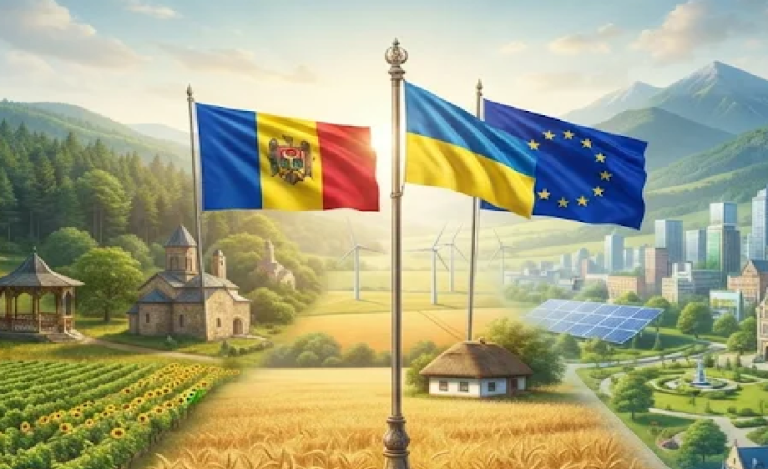
After the long-standing blockade by Budapest, Hungary has agreed to withdraw its objections to the opening of the last two negotiating clusters with Ukraine, diplomatic sources confirmed. This opens the possibility for Kyiv and Chisinau to begin negotiations on all membership chapters in the European Union, Euronews reported.
According to two diplomatic sources, Hungary plans to drop the veto at the meeting of the ambassadors of the EU member states. The intention was announced by Andras Biro-Nagy, state secretary for EU affairs, during the debate on enlargement in Brussels. Budapest had long blocked Ukraine’s candidacy, thereby also slowing the progress of Moldova, whose accession process was linked to the Ukrainian one. The change of position comes after Peter Magyar took power from Viktor Orban, who had been at the head of the Hungarian government for 16 years, Skopje1.mk reported.
The first negotiating cluster was opened in June, the second in July, and the next two in October. Last month, Kyiv and Budapest reached an agreement on the rights of the Hungarian minority in western Ukraine, which was then adopted in the Ukrainian parliament. Although the Hungarian government announced readiness for the next step, the opening of the last two clusters was postponed for several weeks.
Magyar and Ukrainian President Volodymyr Zelenskyy held their first bilateral meeting in Brussels on 16 October, on the margins of the European Council summit, which represented an additional step toward improving relations between the two neighboring countries.
Among the clusters that are to be opened are also sensitive areas such as the environment and agriculture. Agriculture in particular will be an especially big challenge for Ukraine. The European Commission, under pressure from countries such as Poland and France, proposed restrictions on the access of certain Ukrainian agricultural products to the European market and EU funds.
Ukrainian Prime Minister Serhiy Koretky stated that Kyiv cannot accept the permanent exclusion of Ukrainian farmers from the European market and emphasized that any restrictions must be temporary and proportional. The opening of the negotiating clusters is only the beginning of the accession process. The candidates then have to align their laws and practices with European rules, and the EU member states have more than a hundred opportunities in the further phases to impose a veto and block progress.