
 English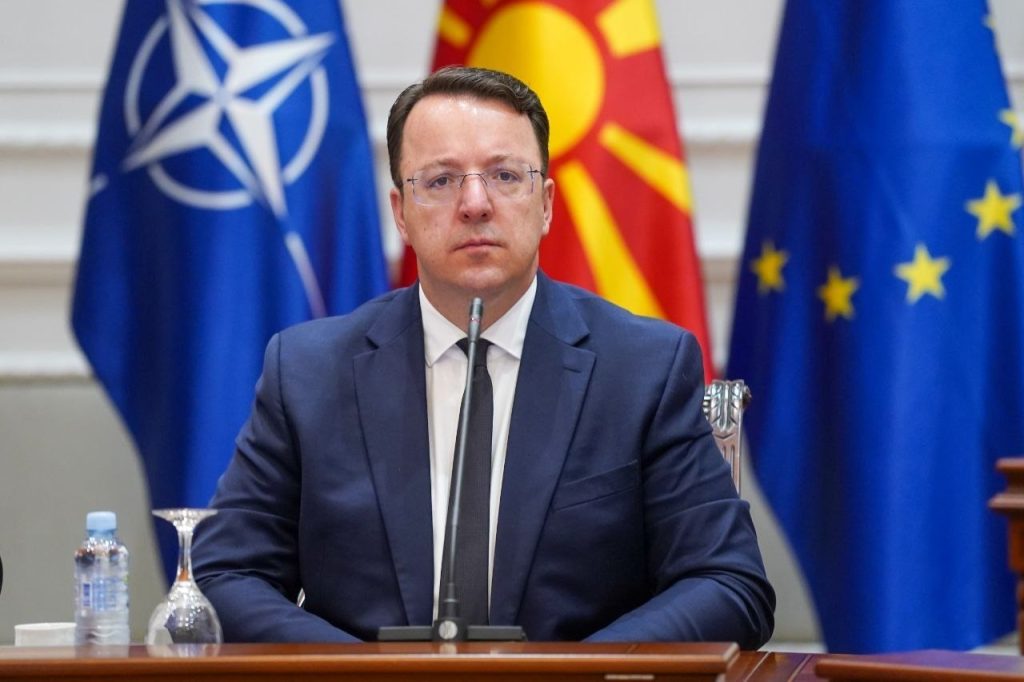
There is nothing secret, the Government has a clear and firm position that it will not accept constitutional amendments under Bulgarian dictate, said Deputy Prime Minister and Transportation Minister Aleksandar Nikoloski in a Sitel TV interview, emphasizing that the Bulgarian blockade of Macedonia’s EU accession talks is political and has nothing to do with the country’s reform progress.
Referring to the criticism from the opposition about the Prime Minister’s stay in Brussels, Nikoloski called them “outrageous”, explaining that it was a private visit and the right to a short vacation with the family.
Asked what is happening in the negotiations with Bulgaria, Nikoloski stated that things are as we know them – on the one hand, the Government inherited an agreement that the previous SDSM Government signed with Bulgaria, and on the other hand, “we have a very clear and firm position of VMRO-DPMNE and the current government that there will be no constitutional changes under Bulgarian dictate”.
It is normal for the two countries to communicate, there is nothing terrible in communication. The point is that if a solution is found, we insist on that and that is how it will be, that it should be within the framework of the principles that VMRO-DPMNE and the Government have. If those principles are not respected, then there will be no solution. I cannot put it more simply than this, stated Nikoloski.
Asked what is different from last year and now in the negotiations with Bulgaria, Nikoloski said that he does not see anything different.
It is a fact that there is a positive momentum in terms of enlargement, which we may not have seen last year or two years ago. And it is also a fact that the dedicated work of the Government, with the personal coordination of Prime Minister Mickoski in terms of the reform agenda, is yielding great results in terms of reforms, in terms of financial inflows into the country and the image of the country, stated Nikoloski.
Prime Minister Mickoski, Nikoloski pointed out, is the only Prime Minister of all six countries in the Western Balkans who personally leads the reform agenda, personally leads the meetings with the European Union, which are attended by all members of the Government, and, as he emphasized, “currently Macedonia is by far the best in terms of performance in terms of the reform agenda.”
So that contributes a lot to Macedonia’s credibility, because we are showing that we really want and are doing reforms and that the blockade by Bulgaria is political, and is not related to any segment of the reforms — whether they are the rule of law, whether they are economic reforms, whether they are social reforms, whether they are infrastructure. That helps a lot in improving the image of the country, said Nikoloski.