

 English
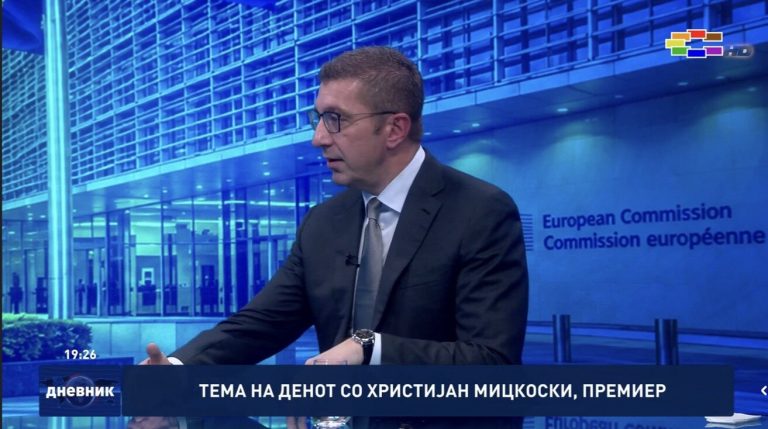
In an interview with Sitel TV, Prime Minister Hristijan Mickoski addressed the global energy crisis. He emphasized that while energy prices across Europe are significantly higher, the current Government is doing everything possible to ensure citizens pay the lowest rates achievable. Mickoski noted that the situation has been managed successfully so far, avoiding the sharp price spikes seen in other countries.
Regarding the nature of the crisis, Prime Minister Mickoski described it as “epic” in several respects—most notably because it is persistent and shows no signs of abating; in fact, it continues to worsen. Having begun in late February, the crisis has now reached the second week of November, yet electricity prices on the exchanges have remained above 300 euros per megawatt-hour for several months. Furthermore, while the price of gas at the start of the heating season last year stood at 28, 30, or 32 euros per megawatt-hour, it is currently at 85 to 86 euros, with occasional peaks exceeding 100 euros per megawatt-hour.
These energy sources and raw materials factor into the final cost of the end product—in this case, the heating provided to parts of Skopje—as well as the electricity consumed by citizens. We have encountered no major issues; rather, we have managed the entire situation excellently thus far. “To continue managing this effectively—ensuring we avoid the kind of sharp spikes seen elsewhere in Europe, where prices for these energy sources have doubled or tripled—we are anticipating potential scenarios and developing models designed to prevent major price hikes for electricity and heating in Skopje,” emphasized Prime Minister Mickoski.
Prime Minister Mickoski explained that, based on the model currently being developed, he does not anticipate drastic price surges that would drive up the cost of living—or inflation. Instead, he expects figures to remain within the range of the current average annual inflation rate in Macedonia, which stands at 3.5–4%.
“This model is unique. If we succeed in implementing it—which will require day-to-day effort throughout the winter—we can ensure a secure winter with a reliable supply of energy. Furthermore, and perhaps more importantly, we will avoid significant price spikes for these two energy sources. As for fuel prices, you would likely agree that the situation has been exceptionally challenging for quite some time.” “In our country, the price of diesel fuel is below 1.5 euros per liter, whereas in the region and across Europe, it exceeds 2 euros—reaching 2.5 or even 2.8 euros in some places. We intend to maintain a policy of low prices here, as we believe this helps protect the standard of living as much as possible; after all, we can all agree that we are living through a time of major global challenges—a state of uncertainty, one might say,” says Prime Minister Mickoski.
Regarding inflation, Prime Minister Mickoski emphasized that, just as in September and October—and indeed in the preceding months—our inflation rate has remained lower than that of Europe and the countries in the region.