


 English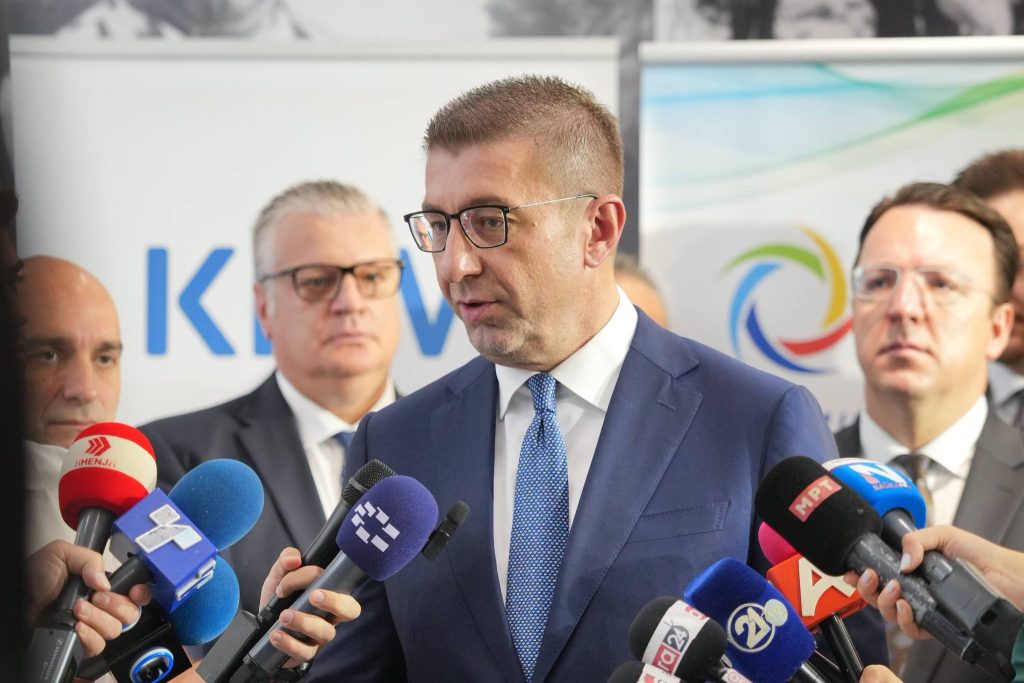
It is the right time for the state to take a bolder step and act as the investor in the “Cebren and Galiste” hydro project, Prime Minister Hristijan Mickoski said today. According to him, there are financial institutions willing to finance this project, one of which is the DFC from the United States.
Mickoski stated that, provided everything goes according to plan, the laying of the foundation stone could be expected next year.
We have been talking about the Cebren and Galiste project for decades and seeking a partner. Now is the right time for the state to take a bolder step and become the investor itself. I believe we have financial institutions willing to finance this project—including the DFC, which currently holds a financial portfolio exceeding $220 billion. We spoke with Caroline Vick, who is responsible for development projects; they are already involved through a $5 million grant for the ‘Krstov Dol’ antimony mine development project. I expect that we will secure financing for this project. According to our calculations, the project’s internal rate of return is in the double digits, and the net present value is also excellent. This is a project that will span the terms of multiple governments; it is not something a single government will both start and finish. Consequently, the realization of this project will yield a multifaceted impact. First of all, it is beneficial for the energy system, as it will serve as an excellent energy reservoir. Furthermore, considering climate change, we will have additional water supplies that are currently unavailable; these can be used for various purposes, including irrigating the Tikves Plain—specifically, providing extra water for crop irrigation. If everything goes according to plan, I expect us to lay the foundation stone next year, Mickoski stated while answering reporters’ questions following the presentation of a major project to revitalize a number of existing hydro plants by the state owned ESM (ELEM) energy company.
Regarding inflation trends, the Prime Minister reiterated his expectation that the situation would remain stable in the coming period. He also noted that it is necessary to await the latest data from the State Statistical Office.
Our inflation rate is lower than the European average, and we expect stability to continue in the period ahead. We have seen encouraging figures for two months—July and August. Inflation stood at 2.3 percent in July and 2.6 percent in August, whereas in Europe, it was 2.9 percent in July and 3.2 percent in August.” “You recall that four years ago, during another energy crisis, we were told that our inflation rate—which was double that of the European Union—was due to imported inflation. We have since demonstrated that this was incorrect and part of a misleading narrative; it was possible to keep the rate below the European average—indeed, with inflation nearly half as high. Now, we await the figures for September. The month is still underway, so let us wait for the State Statistical Office to release the data before commenting. Of course, for our own purposes, we are also conducting assessments through the State Market Inspectorate, particularly regarding the prices of food products and non-alcoholic beverages. Based on our preliminary estimates, we expect the annual rate to range between 1.5 and 2 percent. However, let us see what final figure the State Statistical Office announces, said Mickoski.