


 English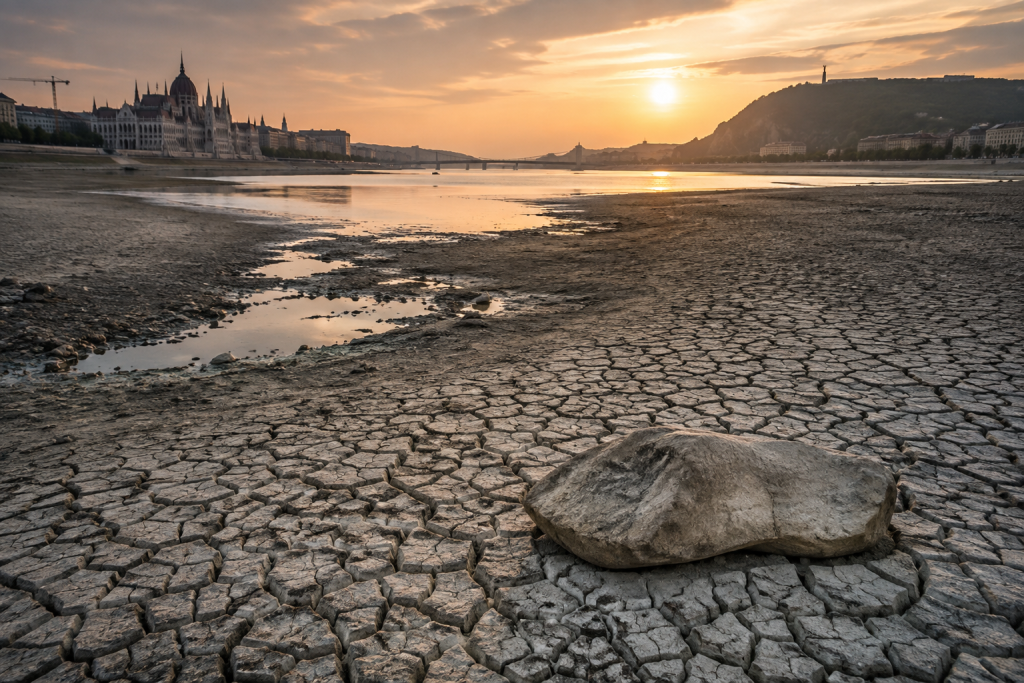
Hungary, a country known for its large rivers, lakes and spas, is facing an unusual and worrying situation this summer – water is literally disappearing in many places.
The long-term drought and extremely high temperatures have seriously affected the country’s water resources. The level of rivers and lakes has dropped, and in some places the water has receded so much that it has left behind cracked earth, parched shores and landscapes that look more like southern Europe at the height of a drought than a central European country.
The situation at Lake Velence, one of Hungary’s most famous lakes, has attracted particular attention, where the water level has dropped to an exceptionally low level. In parts of the shore, the water has receded hundreds of meters, and places that are usually crowded with swimmers and tourists have been left with an almost completely dry riverbed.
There are also problems on the Danube. The low water level not only creates difficulties for navigation and agriculture, but also reveals parts of the riverbed that have been hidden under water for years.
Among them is the so-called “Famine Rock” – a rock that, according to local legends, becames visible during periods of extreme drought and poor harvests. Its reappearance due to the low level of the Danube was seen by the public as another warning of the seriousness of the situation.
The drought is already having an impact on agriculture. Farmers are facing damaged crops and water shortages, while high temperatures are further accelerating the evaporation of water from lakes and rivers.
Scientists and experts warn that Hungary, although traditionally considered a country rich in water, is becoming increasingly sensitive to long dry periods and extreme weather conditions.
The image of dried-up banks and rivers revealing parts of their old beds is perhaps the best symbol of this summer in Hungary – a country through which major European rivers flow, and which is now facing a much simpler but serious question: what will happen if the water continues to disappear?