


 English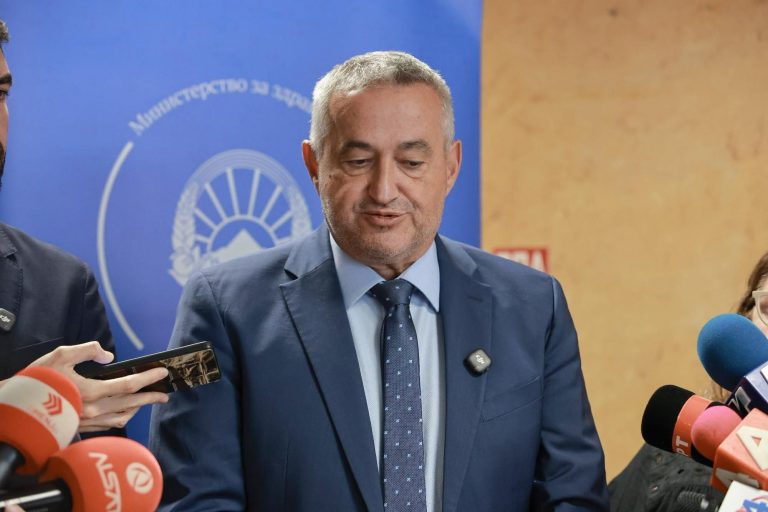
There have been no documented adverse effects in Macedonia associated with the use of the specific BCG vaccine batches, Minister of Health Saso Klekovski stated today. The batches in question are No. 6831 (dated December 22, 2022) and No. 807-1 (dated December 11, 2023) and they have been recalled in Croatia after cases of rare bone inflammation. Both batches were fully utilized in Macedonia by the summer of this year.
No adverse effects linked to the use of these batches have been documented in the country. The Ministry, together with the relevant institutions, is conducting additional analyses, and the public will be informed of the results in a timely manner. The Ministry of Health will ensure the uninterrupted continuation of BCG vaccination in cooperation with UNICEF. We urge parents to continue with the routine vaccination of their children in accordance with the immunization schedule. Vaccination remains the most reliable protection for our children’s health, Minister Klekovski emphasized.
To ensure the continued availability of this important vaccine, an agreement was reached today with UNICEF to secure a one-year supply from a Japanese manufacturer; consequently, the procurement of vaccines from Japan is currently underway.
The vaccines are in storage, and we will arrange for their transport to Macedonia as soon as possible to ensure the continuity of newborn vaccinations with this vaccine. In our country, the practice is to administer this vaccine upon discharge from the maternity ward; however, it can essentially be administered later, meaning there will be no adverse effects from delaying the BCG vaccination. I must express great gratitude to the Immunization Commission; through their prompt response and discussions with UNICEF, we are ensuring that vaccinations continue while reassuring parents that there is no risk of using vaccines that cause adverse reactions. That one-year period will provide sufficient time to gather data from both Croatia and Macedonia regarding whether these adverse reactions can be linked to the vaccine from Bulgaria, allowing us to determine how to proceed next year, said Klekovski.
The Chair of the Immunization Commission, prof. Aleksandra Grozdanova, noted that the Croatian Agency for Medicinal Products and Medical Devices (HALMED) has issued a new statement, reaffirming that there is no direct link between the vaccination and the occurrence of osteomyelitis.
She emphasized that they, too, are conducting investigations and—just like us—are implementing these measures as a precaution.
In our country, there are approximately 16,000 to 17,000 live births annually over the last two years. In principle, this vaccine should be administered immediately after discharge from the maternity hospital; we would expect up to 15,000 children to receive it annually. In cooperation with the Agency for Medicines and Medical Devices of Macedonia (MALMED), we are investigating the batches currently in use—or those used until yesterday—and no adverse reactions have been reported. Regarding the clinical course, osteomyelitis can stem from various conditions—vaccination is far from being the sole cause—and it can manifest anywhere from a few weeks to several years after vaccination. Consequently, the timeframe for establishing an association is very broad. Every reported adverse reaction is being closely monitored,” said Dr. Grozdanova.