


 English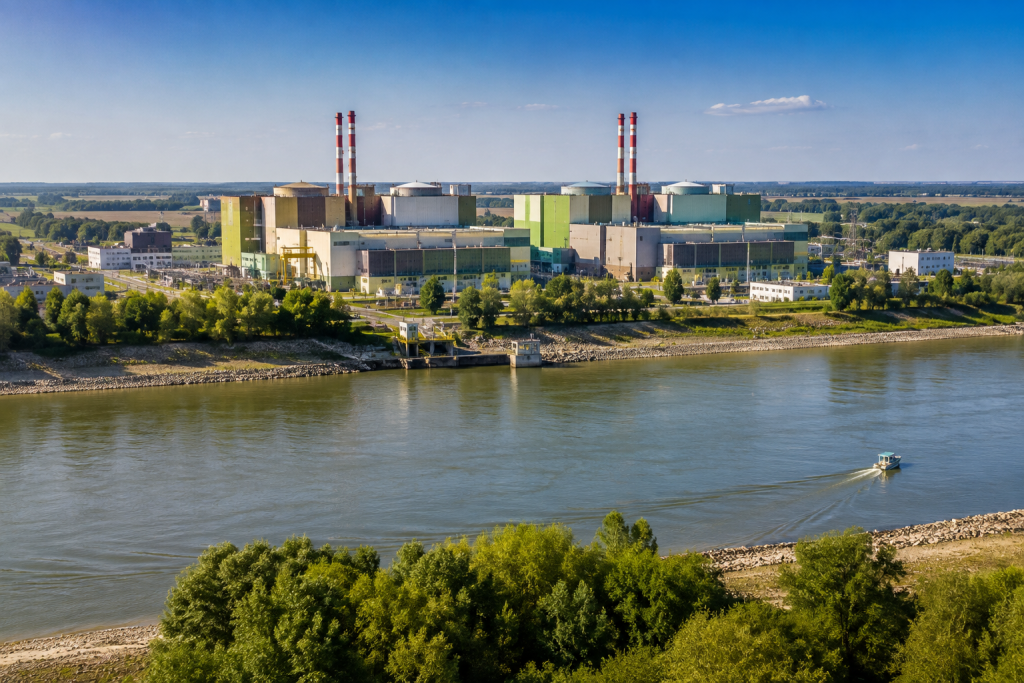
Hungary has managed to restore the PAKS nuclear power plant to full capacity after record-low water levels on the Danube in August caused serious problems with normal electricity production. The problem was unusual but extremely serious: PAKS’s four reactors use the Danube as a source of cooling water, and the extremely low river level limited the amount of water that could be safely withdrawn for the cooling system.
At the most critical moment, in early August, only one of the plant’s eight turbines was operating, significantly reducing electricity production. The Hungarian plant has a total capacity of around 2,000 megawatts and normally provides a large part of the country’s electricity.
Hungarian authorities began emergency engineering work to raise the water level near PAKS’s water intake system. One of the measures was the controlled sinking of two large barges in the Danube, while the construction of an underwater stone threshold in the riverbed began in parallel. In addition, water was diverted from another branch of the Danube to the main riverbed. The goal was simple – to provide enough water for the cooling system and to allow the reactors and turbines to gradually return to normal operation. The intervention paid off.
By August 26, PAKS had again reached its full capacity of around 2,000 megawatts, after several weeks of reduced production caused by the extremely low water level of the Danube.
The PAKS case is not isolated. The same drought has caused serious problems at other European nuclear power plants that rely on river water for cooling. In neighboring Romania, the low water level of the Danube led to the shutdown of the Cernavoda nuclear power plant, further demonstrating the vulnerability of the energy infrastructure to extreme weather conditions. For Hungary, however, the problem at PAKS was particularly sensitive because the plant is one of the pillars of domestic electricity production.
The most important part of the story is not just that PAKS is generating electricity again. During the crisis, Hungary began construction of an underwater weir in the Danube, which should ensure a higher and more stable water level at the point where the plant takes its cooling water. Work progressed faster than expected, and the authorities announced that they wanted to prevent a similar situation in the future with the intervention. Thus, the extremely low Danube turned into a major test for Hungary’s energy security – but also an incentive for a rapid engineering response. PAKS is now operating at full capacity again.