
 English
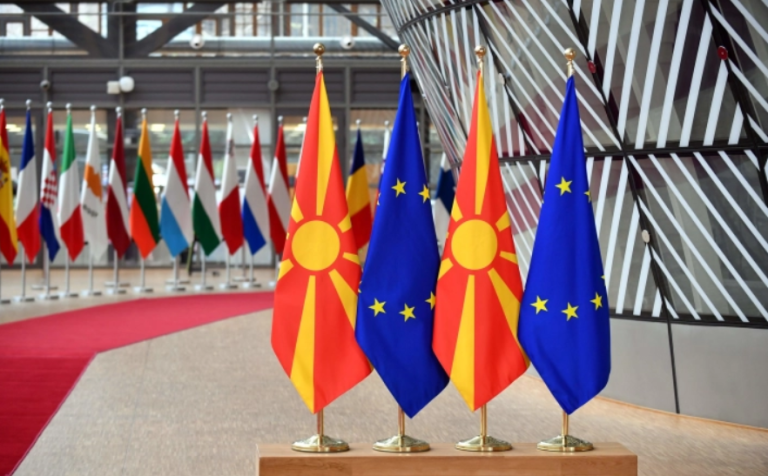
Macedonia has actively engaged with the new Growth Plan for the Western Balkans and intensified efforts to implement its four pillars: gradual integration into the EU Single Market, regional economic integration, fundamental reforms, and increased financial support—according to the European Union’s progress report on the country, which is set to be officially presented this afternoon in Brussels. The document further emphasizes the necessity of implementing key EU-related reforms.
“Macedonia has maintained full alignment with the EU’s Common Foreign and Security Policy, including regarding Russia’s military aggression against Ukraine; this sends a strong signal of its strategic choice to join the EU and demonstrates that it is a reliable partner,” the report states.
Furthermore, the document notes that the country has continued working to finalize all necessary documentation to meet the criteria for opening Cluster 1 (“Fundamentals of the accession process”). However, it adds that no progress has been made regarding the adoption of the relevant constitutional amendments, as outlined in the Council Conclusions of 2022. Macedonia has continued to implement the Stabilization and Association Agreement, with several joint bodies established under this agreement having held meetings. Among these was the Stabilisation and Association Committee, which held a meeting in April 2026—the first since 2021—the report states.
It further notes that the country has maintained good relations with other countries included in the enlargement process and has continued its participation in regional initiatives. “Existing bilateral agreements with neighboring countries must be implemented in good faith by all parties, including the Prespa Agreement with Greece, as well as the Treaty on Friendship, Good-Neighborliness and Cooperation with Bulgaria,” the document states.
The report indicates that the government coalition remains stable, and progress has been made regarding local self-government reforms, although key legislation is still pending. Regarding public administration reform, the report notes that the country is moderately prepared in this area. Progress has been achieved in expanding the scope of e-services and upgrading the electronic document management system.
“In the area of the judiciary and fundamental rights, Macedonia possesses a moderate level of preparedness regarding the implementation of the acquis and adherence to European standards. Overall, the report states, progress in this area has been limited.” The country has made progress in developing a roadmap for the rule of law, which outlines commitments for the coming years regarding further alignment with the EU acquis and the strengthening of institutional capacities, the report states.
The document notes that the country has not made progress in the fight against corruption. “Macedonia is at a level of preparation between ‘some’ and ‘moderate,’ and has made no progress in the prevention of and fight against corruption. Corruption remains widespread and is a matter of serious concern. The amendments to the Criminal Code from January 2026, concerning the criminal offenses of abuse of official position and criminal association, do not adequately address the harmful effects of the 2023 amendments and have contributed to legal uncertainty,” the report states.
The document highlights that the State Commission for Prevention of Corruption needs to step up the proactive identification of potential cases of misconduct. “High-level corruption cases continue to face delays and frequently reach the statute of limitations, contributing to a perception of impunity,” the report notes. European Commissioner for Enlargement Marta Kos is presenting the 2026 Enlargement Package this afternoon, which contains the European Commission’s reports on ten candidate countries for European Union membership.
The package, in which the European Commission assesses the progress of each candidate country, will first be presented to the members of the European Parliament’s Committee on Foreign Affairs (AFET). Subsequently, AFET’s standing rapporteurs will draft specific resolutions for each country, outlining the European Parliament’s positions and recommendations regarding their path toward EU membership.
Tomorrow, November 5, the Committee on Foreign Affairs (AFET), in cooperation with the Committee on Budgets (BUDG), will host the fifth dialogue on the Reform and Growth Facility for the Western Balkans, the third dialogue on the same facility for Moldova, and the sixth dialogue on the Ukraine Facility.