

 English
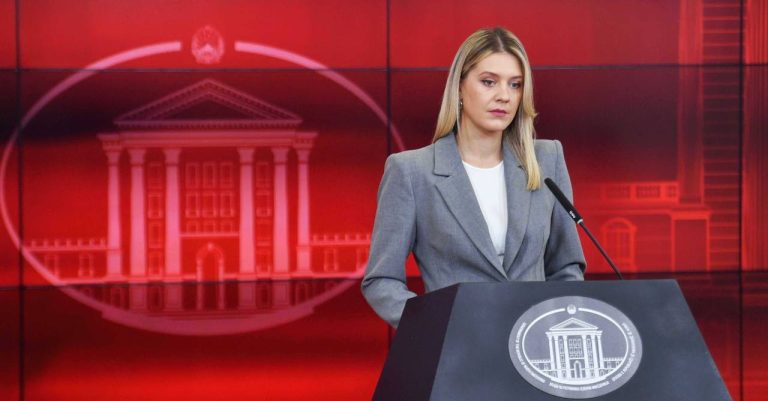
Freedom of expression and the protection of the journalistic profession are rights that every government has an obligation to respect and uphold. This is a principle that should serve as a foundation for every democratic institution, Marija Miteva stated today.
For this very reason, I would like to inform you that, at today’s session, the Government decided to establish a National Committee for the Protection and Safety of Journalists. This is a significant institutional decision that creates an organized coordination mechanism between relevant state institutions and media organizations. Its primary objective is to enhance the safety of journalists, prevent threats and attacks, and foster conditions that allow the journalistic profession to be practiced freely and without hindrance.
We want this issue to receive continuous institutional attention, supported by clear obligations and concrete operational mechanisms. The safety of journalists should not be a topic of discussion only when an incident occurs; rather, it is the duty of institutions to act proactively, identify risks, and ensure appropriate protection. The National Committee will be tasked with monitoring the safety situation of journalists, fostering cooperation between institutions and the media community, and developing a National Action Plan for the protection and safety of journalists by December 15, 2026, in line with European standards and international recommendations.
The plan will be based on four key areas: prevention, protection, effective prosecution of perpetrators, and promotion and education.
Regarding prevention, the focus will be on media pluralism, institutional support, and dialogue with the media. In terms of protection, the plan envisages the development of rapid response mechanisms, as well as police and legal support—including protection against threats in the digital space. Particular emphasis will be placed on the effective handling of cases involving attacks on or threats against journalists, through cooperation with competent authorities to ensure timely investigations and appropriate sanctions in accordance with legal mandates. The fourth segment will focus on education, training, and various activities aimed at raising public awareness regarding the importance of the journalistic profession. The Committee is set to include representatives from the Ministry of Interior, the Ministry of Justice, the Ministry of Digital Transformation, the Agency for Audio and Audiovisual Media Services, the Academy for Judges and Public Prosecutors, the Macedonian Radio Television, and the Association of Journalists of Macedonia, Miteva said.
The Committee will also support the national implementation of the Council of Europe’s campaign, “Journalists Matter,” thereby linking this activity to broader European efforts to promote media freedom and the safety of media workers.