


 English
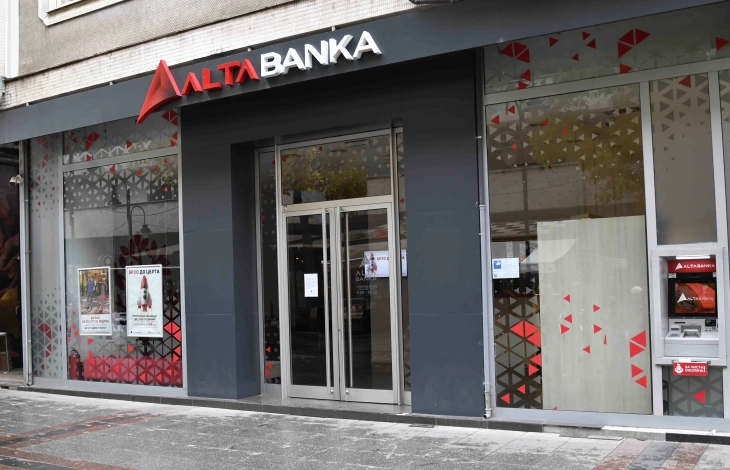
Alta Bank Bitola disbursed funds to 556 pensioners who hold bank accounts but do not possess payment cards. The disbursements took place at the bank’s Bitola branch, exceeding the initial projection of approximately 400 transactions.
The disbursement process proceeded smoothly. Although around 400 individuals had been notified via SMS to visit today, the bank also served all those who had not provided a contact phone number but arrived independently to collect their funds. In accordance with established limits, individuals were permitted to withdraw up to 20,000 denars, within the maximum allowable amount for a two-week period. Additionally, funds allocated by the Ministry of Social Policy, Demography, and Youth for social assistance payments were deposited into Alta Bank accounts today. This ensures that the disbursement of funds to social assistance beneficiaries can commence tomorrow, November 6.
The bank, which took over the small Stopanska Bank Bitola last year, is in trouble after its owner, the Serbian Alta Bank, was shut down after the elections. While the Macedonian branch is seen as liquid, fears of bank runs prompted the Central Bank to introduce a temporary management and to limit the payments from accounts to 10,000 denars a week.
Prime Minister Mickoski addressed the case today, reassuring citizens with funds in the bank that they would not suffer any losses, as they would be reimbursed down to the last denar—including those with savings exceeding 30,000 euros (who represent a small share of depositors). At the same time, he accused SDSM of stoking hysteria, emphasizing that the situation with Alta Banka cannot, under any circumstances, be compared to the “Eurostandard” case.
“I am following the messages coming from the opposition these days very closely—their attempt to incite hysteria, panic, and fear among the citizens—much like what happened when Orbán lost the elections in Hungary. Back then, they used the exact same rhetoric and the same messages. In reality, all that happened was that we secured a loan from Hungary under extremely favorable terms, and the State Audit Office confirmed that these funds were used to improve the performance of the Macedonian economy. They continued with this same rhetoric even after Vučić’s defeat in Serbia, and earlier, when we signed the strategic agreement with the United Kingdom—claiming we would be taking in migrants. Every single year they push the same narrative—predicting that we are on the verge of bankruptcy—yet, year after year, we continue to achieve better results.” The Alta Bank case is a situation originating in Serbia. In our country, this is an imported issue; it bears no resemblance to the situation that occurred with “Eurostandard.” SDSM caused that bank to go bankrupt, after their former Minister of Finance withdrew deposits totaling 250,000 euros just a day or two before the bankruptcy. That is a fact. We are now facing an imported problem. I am even more concerned about another phenomenon that no one is bringing up: the fact that the volume of trade between us and Serbia in 2025 amounted to 1 billion euros. Several companies have reached out to me, complaining that their partners in Serbia are on the verge of bankruptcy because their funds are frozen in Alta Bank. They are asking, “What should we do? Please, as the government, help us.” This will become a much larger problem, as businesses are closing and companies are failing; people will lose their jobs—not only in Serbia but also here—because that billion euros represented the annual turnover between our countries, Mickoski added.