

 English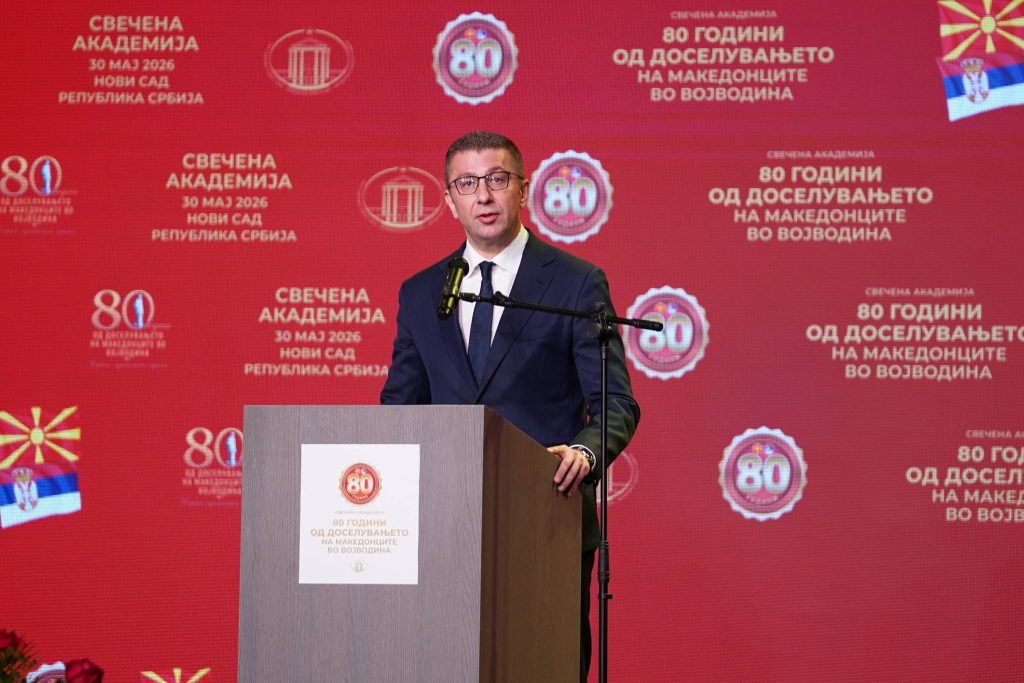
A Nation That Preserves Its Roots Never Gets Lost, Says PM Mickoski at Ceremony Marking 80 Years of Macedonians in Vojvodina
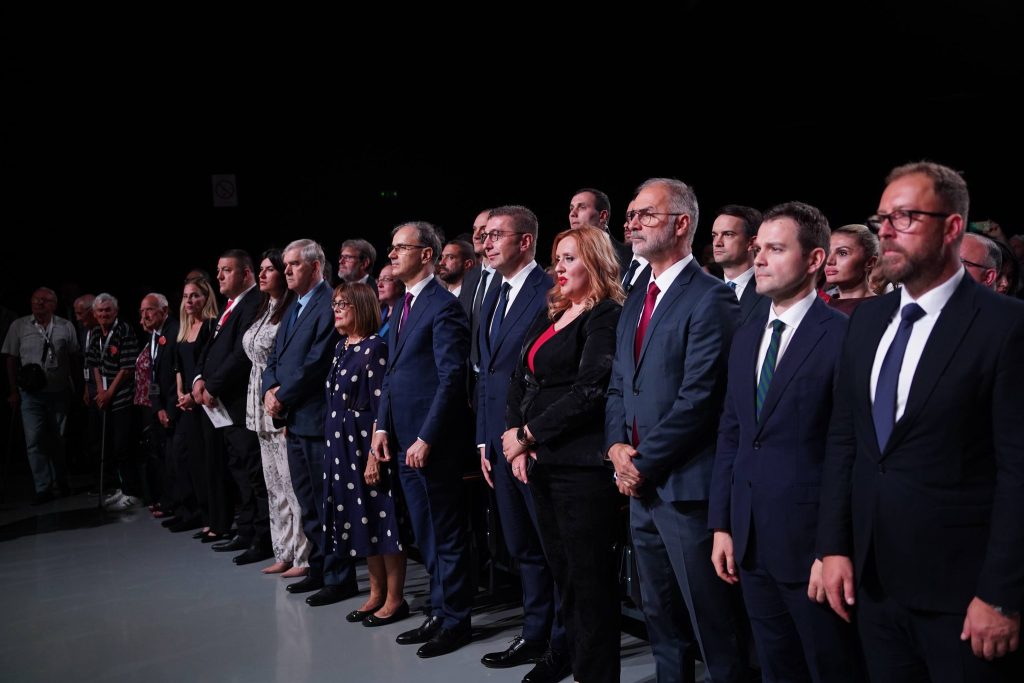
A nation that preserves its roots never gets lost, a nation that preserves its language never remains without a home, and a nation that preserves its culture will always have a future, Prime Minister Hristijan Mickoski said at the ceremonial academy marking the 80th anniversary of the settlement of Macedonians in Vojvodina, held this afternoon in Novi Sad.
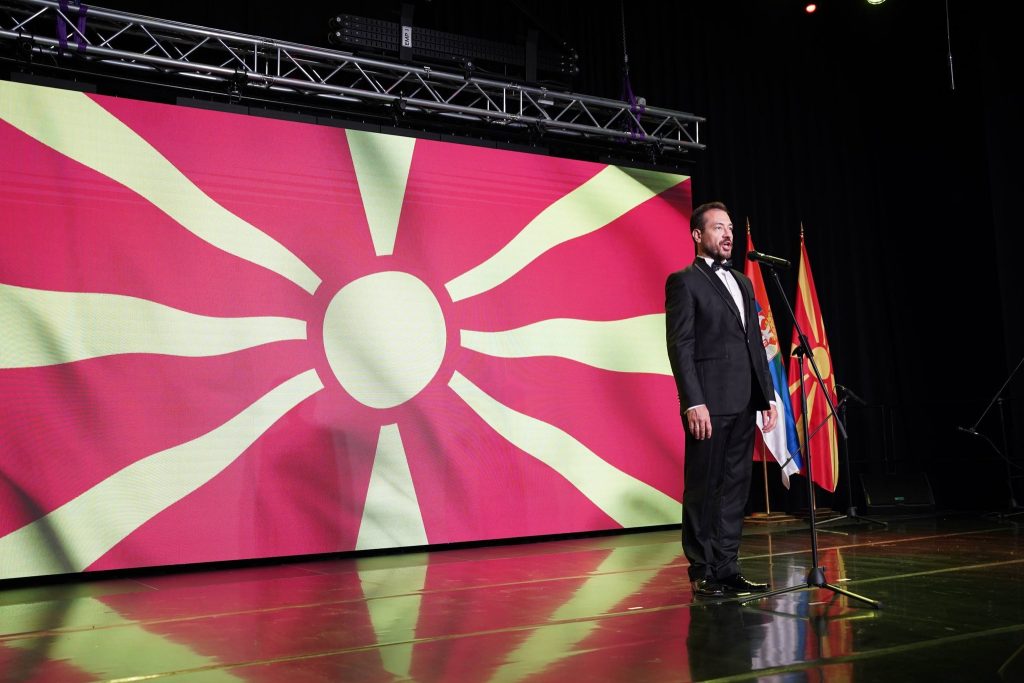
Identity, he stressed, is not preserved on its own. Language does not survive by itself. Tradition is not passed on without love, effort and conscious dedication. Preserving a name for eight decades requires generations of people who refuse to forget. It requires mothers and fathers who speak their mother tongue at home, teachers, cultural workers, clergy, people who organize folklore festivals, literary evenings, exhibitions, academies and schools, but above all people who understand that a nation without culture is a nation without memory, and a nation without memory can easily lose its sense of direction.
“Your story is proof that a person can live far from their homeland while their heart continues to beat to the rhythm of their mother tongue; that one can build a new home without forgetting the old one; and that one can be a loyal citizen of the country in which they live while at the same time being a dignified guardian of their own national and cultural identity,” Mickoski said.
He emphasized that this balance—the ability to remain true to oneself while being open to others—is a great value and an important lesson not only for the Balkans, but for Europe and the world as well.
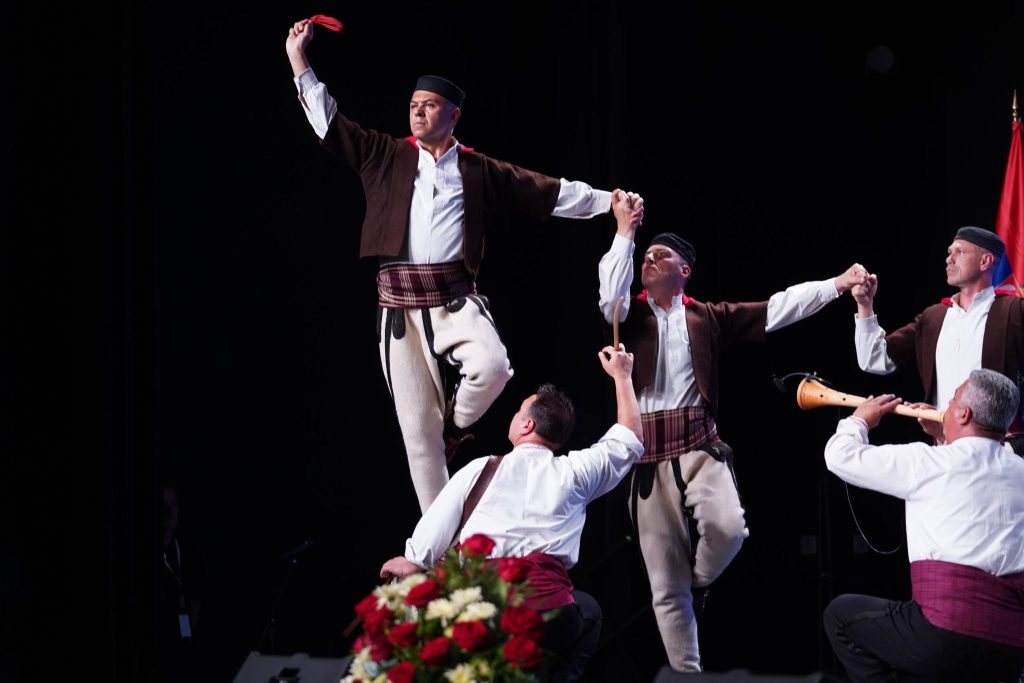
Mickoski noted that North Macedonia and Serbia are connected not only through political and state relations, but also through people and generations that grew up in the same cultural and spiritual environment, through the songs they know, the books they have read, and the values by which they were raised. What unites them, he said, is a shared sense of family, honor, humanity and dignity, as well as a profound historical truth: the Balkans advance not when peoples distance themselves from one another, but when they build trust, mutual respect and sincere partnership.
The Prime Minister pointed out that, at a time when the world is facing new divisions, uncertainties and geopolitical tensions, the peoples of the region have an obligation to build bridges rather than walls, to preserve the closeness forged through generations, and to pass it on as a value to future generations.
“Today, from Novi Sad, we send a message of unity, respect and friendship—a message that the future must be built on what connects us, not on what divides us,” Mickoski said.
Addressing young Macedonians in Novi Sad, Pančevo, Jabuka, Kačarevo, Zrenjanin, Belgrade, Vranje, Niš, Leskovac and wherever the Macedonian community lives, he stressed that they are the generation of a new era—an era of technology, mobility and global opportunities—but that awareness of one’s roots becomes even more important in such times.
“Do not allow modernity to take away your memory or the speed of time to erase your sense of belonging. Be modern, successful and educated. Conquer universities, companies, institutions and cultural stages, but never forget which language taught you your first word, which songs your parents sang to you, and which stories your grandparents told you,” Mickoski said.
According to him, Novi Sad and Vojvodina have always been places where diversity has been seen not as a weakness but as a richness; places where peoples did not have to abandon their identity in order to live together, but instead created, through mutual respect and understanding, a mosaic of cultures, languages and traditions that today represents one of the greatest treasures of this part of Europe.
“In that story, Macedonians have their own honorable, deserved and dignified place,” Mickoski underlined.
The Macedonian delegation in Novi Sad, led by Prime Minister Mickoski, includes Deputy Prime Minister for Inter-Community Relations Ivan Stoilković, Minister of Foreign Affairs and Foreign Trade Timčo Mucunski, and Minister of Culture Zoran Ljutkov, among others.
The ceremonial academy was also addressed by Serbian Prime Minister Đuro Macut, President of the Government of Vojvodina Maja Gojković, and President of the National Council of the Macedonian National Minority in Serbia, Zorica Mitrović.