


 English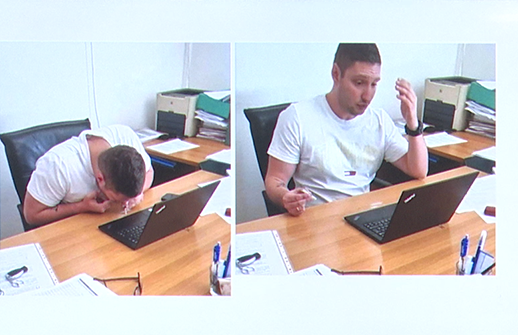
The SDSM party, which is engaged in a growing dispute with a number of media outlets, held a press conference today to attack Republika as alleged source of fake news. The reason for the press conference, held by SDSM official Jon Frckoski, was a recent editorial by Republika’s Igor Caveski, and the fact that it was republished by Brussels Morning, a Brussels based outlet.
The editorial covered the growing SDSM attacks on outlets, that have included foul language, allegations that an outlet is a “media octopus” and even mockery of physical appearance of journalists who SDSM leader Venko Filipce does not like.
In this instance, Frckoski and SDSM objected to the fact that the article was not original reporting by the Brussels based outlet, but a translation of Caveski’s editorial published in Republika.
The continuous press conferences and announcements of SDSM directed at the media and journalists can no longer be treated as isolated reactions or daily politics. They have turned into a systematic strategy – a strategy of pressure, labeling and an attempt to discipline the public space. Instead of building an alternative as an opposition party, raising important issues and offering solutions, SDSM invests significant energy in a showdown with the media. Press conferences, which by definition should serve to inform the public, are used as a tool for publicly calling out and stigmatizing editorial offices and journalists who do not fit into the desired party narrative. In this model, there is no difference between a journalist’s report, an editorial position, an author’s column or a transmitted statement. Everything is declared a “scenario”, every criticism is a “witch-hunt”, and every question as evidence of hostility. Thus, SDSM is not leading a debate, but an attempt to impose permissible limits on public speaking, Republika responds to SDSM.
Frckoski went so far to call this a case of “fake news” and “organized misinformation” – for the fact that Republika reported that the column was republished in Brussels, and accused our outlet of “hate speech” and “fabricating scandals aimed at SDSM, Venko Filipce… and an anti-EU campaign”.
What is particularly concerning is the fact that these attacks are not spontaneous, but institutionalized – through official press releases, announcements and public appearances. When a political party systematically attacks the media, it sends a message not only to the outlets, but to the entire society: that criticism will be sanctioned, and silence rewarded. In that sense, there is no need to delve into the issues of competence, credibility, moral authority or public weight of the individuals holding these press conferences – the very decision to have them be the messengers of such messages is telling enough. Especially not to mention the weight and moral authority of the individual who today took it upon himself to speak about some kind of debunking… Perhaps it would have been better to remain silent after he himself was recently exposed (reference to the publication of photographs in which Frckoski is snorting drugs in his public workplace). Paradoxically, this war with the media is intensifying at a time when SDSM is facing a decline in trust and serious internal turbulence. Instead of political reconstruction and confronting its own weaknesses, the party chooses to shift its focus to external “culprits”. Instead of responsibility – defensiveness. Instead of arguments – labels. A party that cannot bear a critical article can hardly submit itself to public accountability. And an opposition that swaps politics for press conferences aimed against the media risks losing its essential role – to be a corrective to the government, not a corrective to the headlines. Ultimately, the problem is not in the media that asks questions. The problem is in the politicians who responds to those questions with pressure. That is not a sign of strength, but of insecurity. And the more it is repeated, the clearer it becomes that instead of fighting for the trust of citizens, SDSM has chosen to fight against the public, Republika adds in its response.