


 English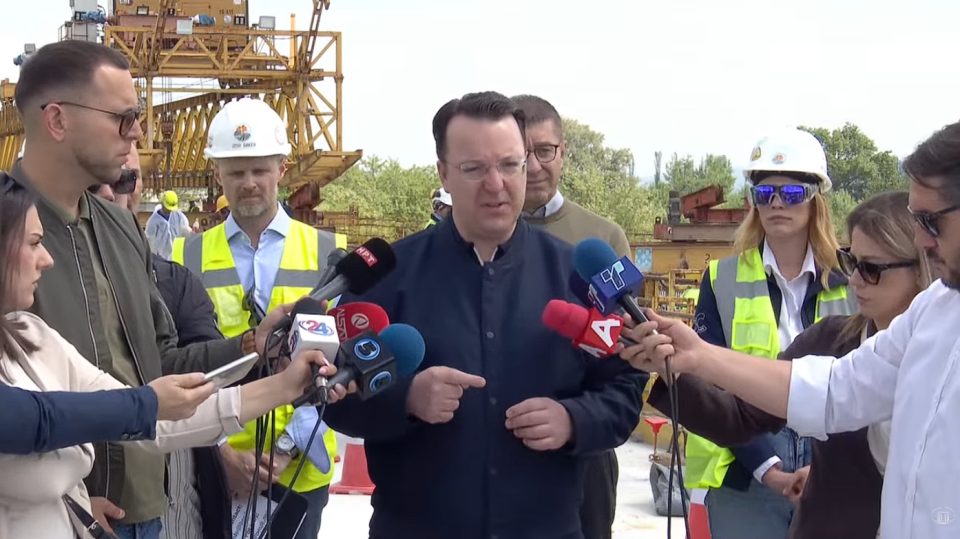
The feasibility study for the fast railroad line along the north-south Corridor 10 will be completed this summer, and then followed by a review, said Deputy Prime Minister Aleksandar Nikoloski.
The planning process must end perfectly. The initial deadline I stated, that the project will be completed by 2031, remains, and nothing has been changed, said Deputy Prime Minister Aleksandar Nikoloski.
As Nikoloski pointed out in response to media questions, activities that are extremely important, even the most significant for the entire project, are underway, but they are not sufficiently visible and interesting to the public. The project began in October last year, and construction activities include geotechnical surveys.
Considering that the request, both from us and the bank that will fund the project, will be that the deadline for completion is five years, there will be no compromises, because the penalties for the contractor will be very high if they break the deadline, said Nikoloski, who is also Transportation Minister who is negotiating the deal as part of the strategic partnership treaty with the UK.
The first phase is to secure financing, the second is to do good planning and the third is to carry it out on the ground. In terms of financing, the work was completed last year, an indicative offer was selected, which, of course, when the planning process is completed, which is the second phase, should be confirmed. That process was completed last year. In terms of planning, in my opinion the most important and significant part, considering that we will be working on this project with Great Britain, the documentation and what was previously done as planning with the European Union, was considered insufficient for the implementation of such a large infrastructure project and therefore we entered a completely new planning process, which includes many phases. Nine routes were offered, one was chosen. It is clear what the route is, it more or less follows the existing line, but eight other options were offered. The second is an environmental impact assessment based on the route that was chosen. The third is an assessment of the impact on the social environment. The fourth is for the protection of cultural and historical heritage, taking into account that there are at least two large sites on the route, Stobi and Vardarski Rid. The fifth is a preliminary design or projection, the sixth is geotechnical investigations and the seventh is the project, said Nikoloski.
According to him, due diligence analysis and feasibility study are being done side by side, which should incorporate all these activities.